Understanding how parts shape sound and feel helps anyone building a custom mechanical keyboard. This introduction outlines why stems, the bottom housing, and dampening matter for typing and gaming performance.
Modern silent switches aim to cut noise while keeping a premium typing feel. Makers tune keystroke consistency, feedback, and RGB-ready designs to suit different users.
When a page shows a page blocked extension, a quick step is to try disabling extensions to see if the issue clears. That tip often fixes blocked extension blocked errors when browsing vendor pages for parts.
This article compares models and materials to reveal how each choice shapes sound and typing experience. You will learn which switch type and bottom housing lead to quieter keys and better performance in shared environments.
The Evolution of Silent Mechanical Switch Technology
The last decade changed how keys are quieted, shifting from simple rings to engineered dampening systems. Designers moved from singular rubber rings to layered silicone pads and housing tweaks that tune the sound and feel.
Silicone Dampening Methods
Kailh Prestige 1st Gen showed that adding thicker silicone pads can cut noise by about 30% compared with standard mechanical switches. Makers place a silicone ring on the stem and padding in the bottom housing to refine the typing feel and reduce bottom-out buzz.
Structural Noise Reduction
The industry trend in 2025 favored structural solutions. The TTC Frozen V2 uses a dual rubber ring system to hit a quiet 32dB output. Modern keyboards aim for a consistent keystroke by letting stem and housing work together to cancel unwanted sound.
- Designers pair internal padding with precise housing geometry for better feedback.
- Layered damping reduces rebound and smooths the typing experience.
- If a vendor page triggers a page blocked extension, try disabling extensions so research is not interrupted.
“The move toward complex dampening marks a major step in making mechanical keyboards office‑friendly without losing performance.”
Understanding Silent Switch Material Acoustic Impact
How a housing and stem absorb energy defines the tone and character of every keypress.
Different plastics and damping components change the sound and feel of a mechanical keyboard. The Kailh Ocean Heart combines PC, POM, and a silicone ring to target mid and high frequencies. That blend creates a clear, controlled tone.
The Kailh Box Deep Sea uses a nylon base to convert a wider band of keystroke energy into a deeper, more muted output. Nylon often gives a warmer, rounder note when keys bottom out.
Engineers test how stems and housings move energy into heat. That conversion governs how much noise each press makes and the overall typing experience.
- Energy conversion: housing plus stem dictate how kinetic energy is absorbed.
- Tone control: PC+POM+silicone yields a brighter midrange signature.
- Low-end damping: nylon shifts the profile toward a muted, fuller sound.
“By choosing the right parts, you can tune keys to match a quiet workspace without losing feel.”
If you encounter a page blocked extension while researching specs, try disabling extensions so technical pages open correctly. For more on how case choices shape typing tone, see how case material affects keyboard acoustics and typing.
Comparing Linear and Tactile Silent Performance
Choosing between linear and tactile designs changes both the feel and the typical noise profile of a keyboard.
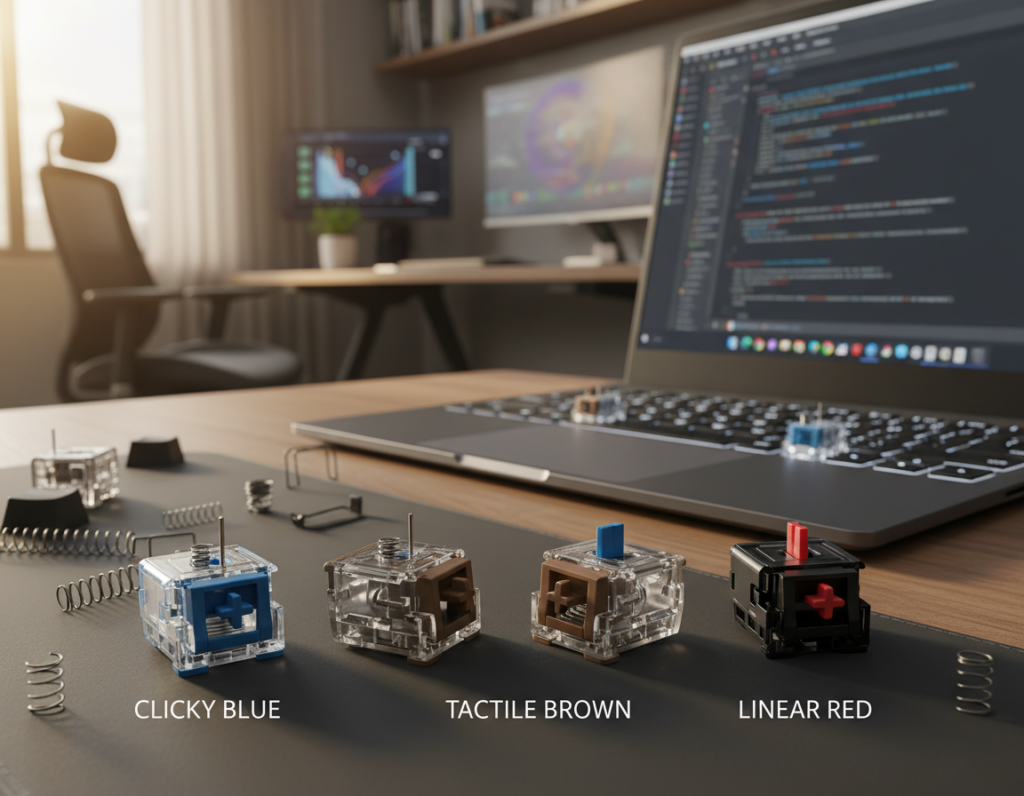
Linear switches offer a smooth travel path with minimal interruption, so they tend to produce less mechanical sound during actuation. This makes them a common pick for quiet setups and fast typing.
By contrast, a silent tactile design adds a bump that gives clear feedback. That bump can generate extra noise during the actuation phase, even if dampers cut bottom‑out sound.
- Outemu Lemon V3 uses a 35g actuation force to reduce fatigue over long gaming and typing sessions.
- Kailh Ocean Heart offers a 1.7mm actuation distance for faster response and competitive performance.
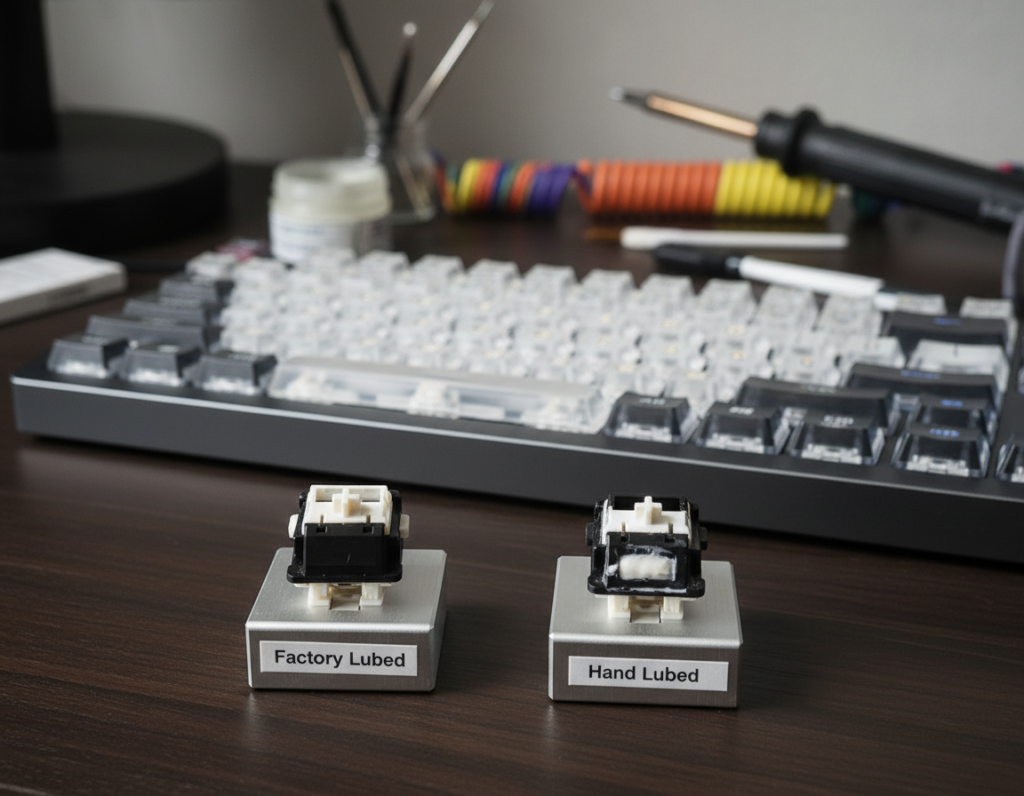
- Proper lubrication of the stem and housing preserves feedback and performance across millions of keystrokes.
“A tactile bump improves feedback but can add noise; linear layouts often stay quieter while keeping speed.”
If a vendor page triggers a page blocked extension while you compare models, try disabling extensions so you can view full specs and sound tests.
The Role of Housing and Stem Materials in Sound Dampening
Housing and stem choices set the baseline for how a key sounds and feels under your fingers. The material mix inside each case defines how energy converts to heat, vibration, and audible tone.
Polycarbonate and Transparency
Polycarbonate housings give a clear, bright tone and let RGB shine through. They are popular in many modern keyboards for aesthetics and crisp feedback.
Polycarbonate tends to reflect more higher-frequency sound than denser bases.
Nylon for Sound Absorption
Nylon bases, like the Kailh Box Deep Sea, absorb roughly 37% more noise than standard polycarbonate. That extra damping gives a deeper, fuller profile.
For a quieter, richer result, many builders choose nylon when they want a warm, satisfying sound from their switches.
POM for Friction Reduction
POM stems reduce friction and wear. The Kailh Coconut uses full-POM self‑lubrication to reach about a 0.08 coefficient of friction.
Lower friction means smoother travel, less mechanical noise, and a cleaner typing feel.
- The housing and stem composition is the primary factor in effective dampening for high-end switches.
- Bottom housing designs often add silicone pads to further cut sound when the stem bottoms out.
- If a page blocked extension prevents research, try disabling extensions so you can read full specs on each part.
“Choosing a silent tactile option with a nylon housing yields a deeper, more satisfying sound profile for custom builds.”
Gaming Performance and Communication Benefits
Every millisecond matters in tournament matches, so your keyboard must register presses with minimal delay.
Linear switches are popular for competitive play because they give a smooth path and repeatable actuation. Gamers favor them when they need consistent timing and less audible feedback that can distract teammates.
Quiet operation helps maintain clear voice comms in shared spaces. When keys make less noise, teammates hear calls and cues without typing ringing in the background.
- Fast registration and low jitter define gaming performance.
- Reduced noise keeps communication clear and focus intact.
- If a vendor page is blocked by an extension, try disabling extensions to view benchmarks and reviews.
“Pro players pick parts that balance tactile feedback and low noise to protect team communication.”
Choosing the right switch type improves both in-game feedback and overall experience for users in any environment.
Essential Considerations for Custom Keyboard Builds
Choosing parts that match your typing habits shapes both feel and long-term noise performance. Start by picking the right silent switches to set the tone for your build. Small choices early will pay off in the final typing experience.
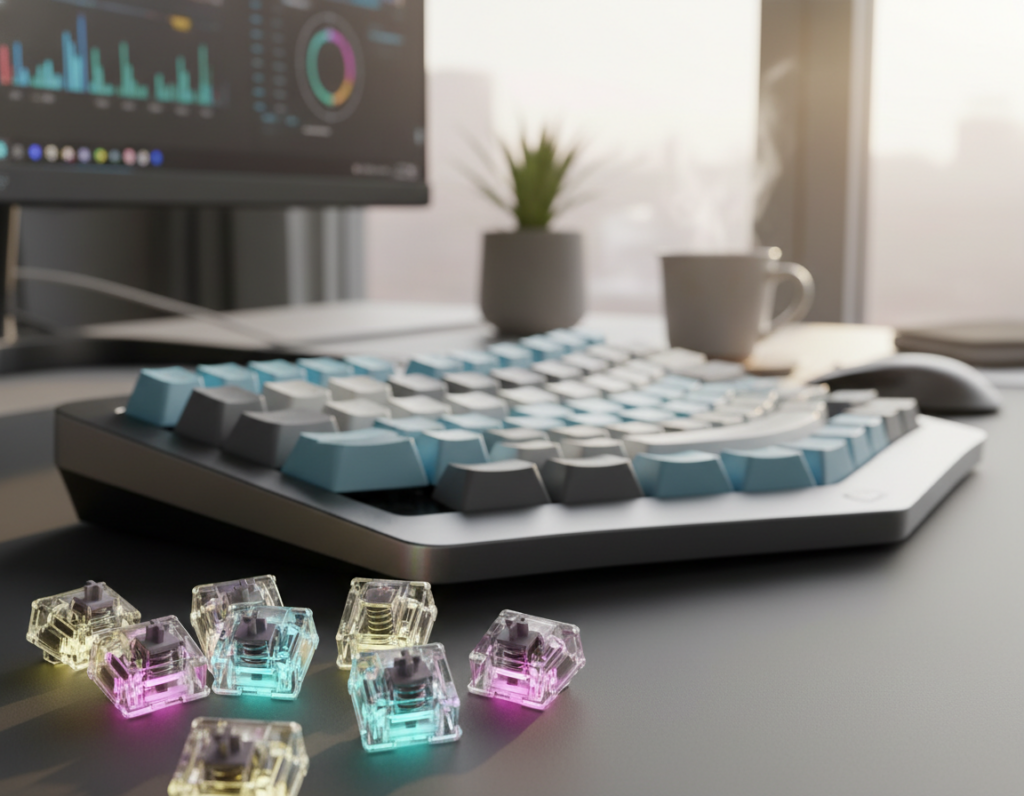
Plan for RGB and tone trade-offs. A clear housing helps lighting but can change sound. If you want a balanced result, pick a housing that pairs well with your dampening plan and stem design.
If a page blocked extension appears while researching parts, try disabling extensions so compatibility charts load. This avoids a blocked extension blocked problem when you check keycaps, stabilizers, and PCB layouts.
Small mods improve feel and reduce noise. Lube the stems and housings and use quality dampening where it matters. Many builders mix components to make keyboards that are both quiet and responsive.
“Prioritize dampening quality and part compatibility to build a reliable silent mechanical keyboard.”
- Choose switches that fit your typing style and latency needs.
- Match RGB goals with housing selection for the right balance of light and sound.
- Consult compatibility charts and guides like reducing mechanical keyboard noise.
Final Verdict on Choosing Your Silent Switch
Pick silent switches by testing how they feel and by matching them to your workspace needs.
For many users, linear switches offer the smooth travel and low noise that suit both gaming and professional typing. Compare top models for overall performance and response before you buy.
If a page blocked extension prevents research, try disabling extensions or check for a blocked extension on that page. Doing so helps you reach final recommendations and choose a silent switch that gives the feedback you want without excess noise.