Choosing the right approach to switch lubrication shapes your typing and gaming experience. Recent VGN research (published February 04, 2026) highlights consistency differences between factory lubed vs hand lubed switches. This matters for anyone who wants a reliable feel from every keystroke.
Out of the box, many users appreciate pre-lubricated parts because they reduce noise and friction without extra effort. The automated process applies precise lubrication so a mechanical keyboard can sound and feel uniform from day one.
Yet some enthusiasts still prefer manual work to tune switches to personal taste. That method can improve texture and sound, but it may also add variability across keys and demand time and skill.
Knowing how each method affects switch feel and sound helps you pick the best path for long-term performance. For newcomers, try factory lubed switches for consistent results; experienced builders can weigh the trade-offs before lubing by hand. Use the VGNLAB discount code for a 10% saving on first-time component purchases when testing options.
The Role of Switch Consistency in Typing Performance
Even tiny variations in actuation force or scratchiness can throw off your rhythm during long sessions. VGN testing shows inconsistent actuation force leads to reduced accuracy and faster fatigue for people who type or game for hours.
Consistency means every key delivers the same feel and sound. That uniformity prevents distracting uneven actuation and helps you keep muscle memory during fast input sequences.
Proper lubrication reduces friction between internal parts, allowing the stem to glide smoothly. Lower friction preserves consistent actuation and improves smoothness during rapid typing and gaming.
Many users notice that small differences in switches feel can harm gaming performance when timing matters. Professional mechanical keyboards aim for uniform behavior so users keep a steady typing rhythm.
- Reduce friction to cut scratchy noise and improve sound quality.
- Standardized production and high-quality lubricant help ensure consistent experience across keyboards.
- Explore how factory lubed switches aim to deliver identical performance out of the box.
Comparing Factory Lubed vs Hand Lubed Switches
Choosing between a production-applied coating and a do-it-yourself tune up depends on priorities: consistency or custom feel.
The Manufacturing Process
Automated application ensures the same quantity of lubricant lands on stem rails and contact points. High-volume lines meter the amount to the stem and rails so parts out of the box perform predictably.
Gateron Oil King is often cited for high-quality factory lubrication that gives a smooth feel without extra effort. This production method favors users who want a uniform experience across every key.
The Manual Customization Approach
Hand lubing requires opening each switch and brushing lube on the stem, springs, and bottom housing. Enthusiasts do this to tune sound, travel feel, and smoothness to personal taste.
Be prepared to spend time. Applying inconsistent amounts can create uneven contact and varied feel across a keyboard, so patience and steady technique matter.
- Factory lubrication aims for batch-wide consistency and low setup effort.
- Manual work gives finer control but increases time and potential variability.
- The stem–bottom housing interface is the key area for reducing friction.
Understanding Lubrication Levels and Their Impact on Feel
Lubrication depth changes how a key feels and how it sounds under fast typing. Choosing heavy, light, or no lube affects tactile response, smoothness, and noise.
Heavily Lubed
Heavily lubed switches deliver an ultra-smooth feel and muted sound. Scratchiness nearly disappears and the stem glides with minimal friction.
This option can make springs and the bottom housing sound deeper and more damped. Be careful: too much lubricant may slow the stem and dull tactile points.
Lightly Lubed
Lightly lubed switches are often the sweet spot. A small amount on rails and stem cuts noise while keeping character.
Many mechanical keyboards now come with a light coating from the manufacturer to reduce effort for users and improve smoothness without heavy modification.
Unlubed or Dry
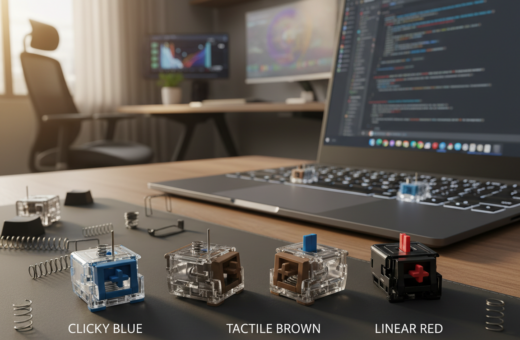
Unlubed or dry switches like Novelkeys Cream or standard Cherry MX Brown give a blank canvas. People who prefer switch lubing by hand enjoy customizing feel and sound.
- Heavier lube = smoother feel, deeper tone.
- Light lube = balance of smoothness and character.
- Dry = full control for custom lubing; requires effort and care.
Conclusion: Choosing the Right Lubrication Method for Your Keyboard
Deciding on a lubrication method comes down to whether you value instant uniformity or detailed customization.
Factory lubed switches give many users a consistent, ready-to-use feel with minimal effort and reliable sound for gaming and typing. They reduce friction across the housing and stem so the keyboard performs predictably from day one.
For enthusiasts, switch lubing by hand offers control over amount and placement of lubricant. That method can shape sound, spring tone, and tactile feel, but it requires time and steady technique.
Try both paths if you can. Choose the method that matches your goals and the effort you want to invest, and you’ll keep your keyboards feeling smooth for years.