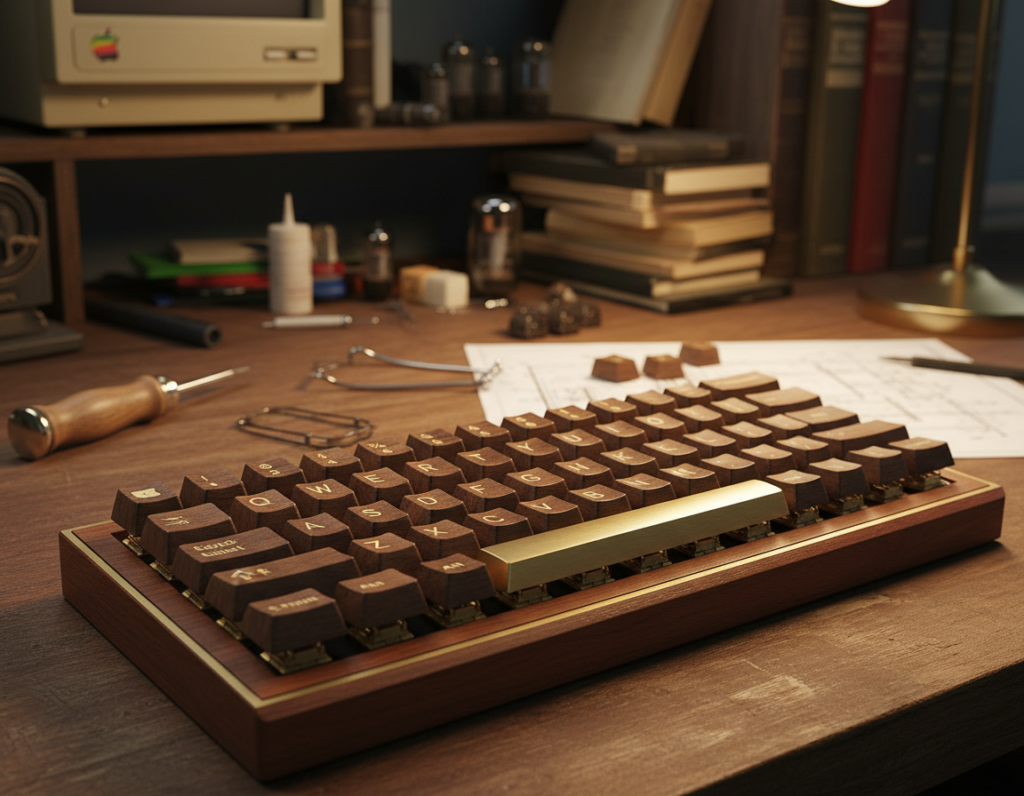
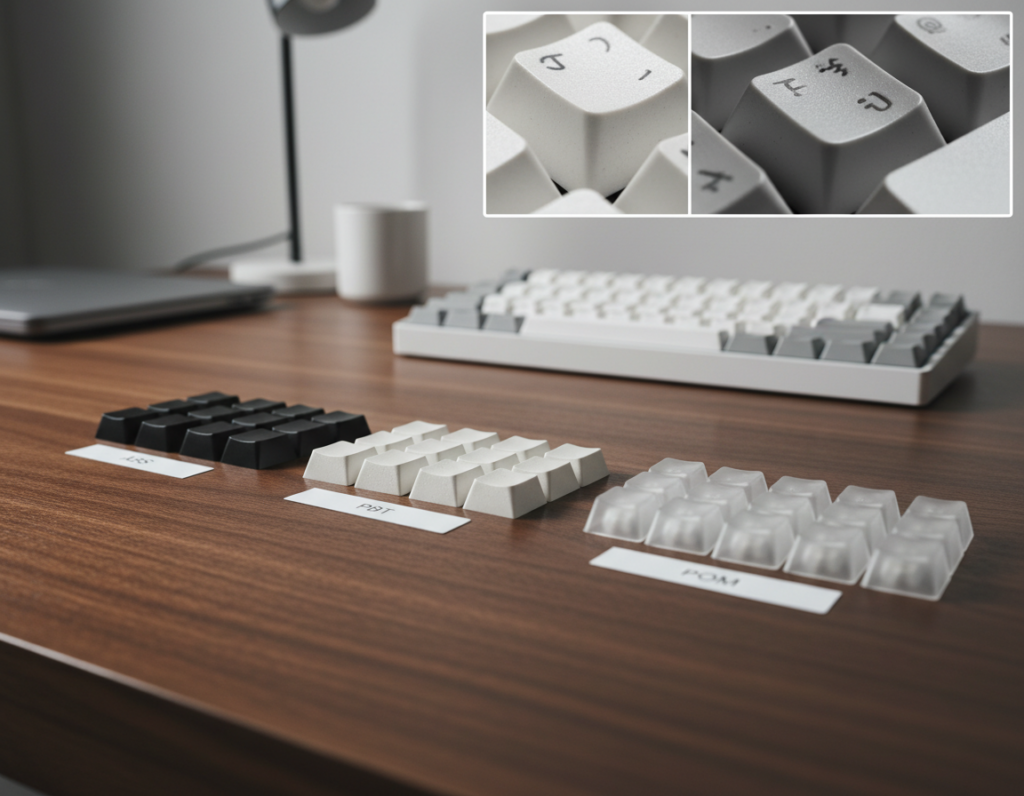
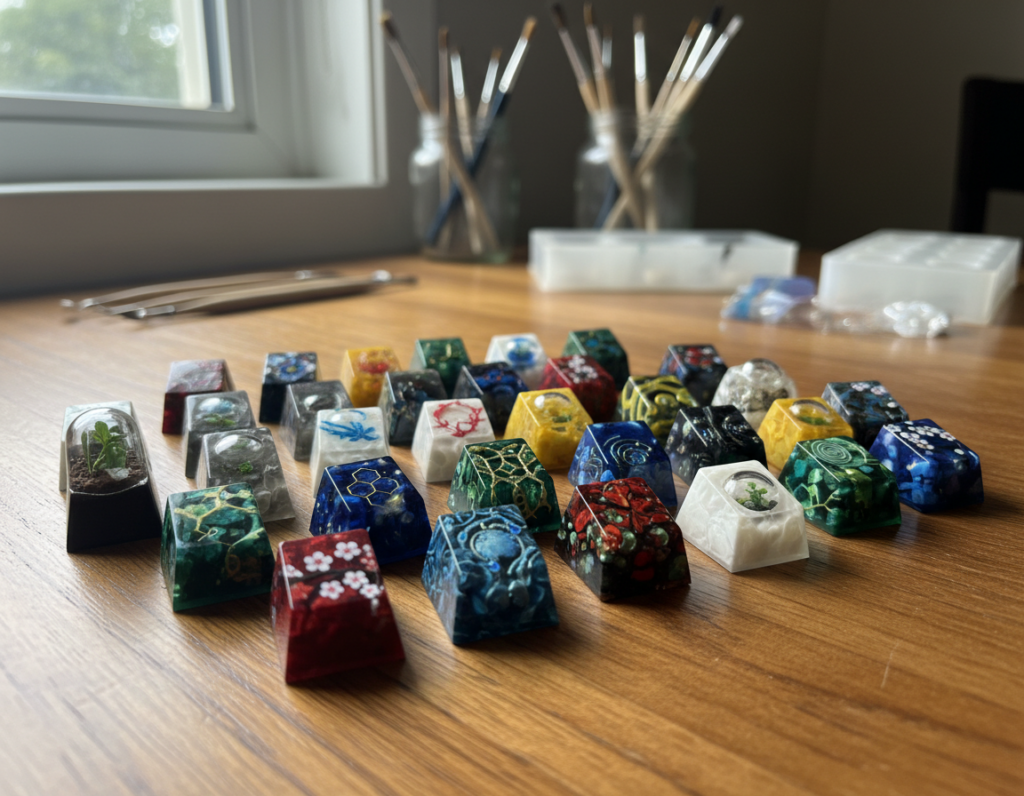
What makes a drop special? In the maker scene, small batches, timed releases, and maker runs create real scarcity. Collectors chase uniqueness and daily users hunt for a single accent that changes feel and sound.
This guide tells you what to expect now. You get a practical buying checklist, a curated roundup of pieces worth grabbing, and two brand spotlights on Keychron and Jelly Key to compare style and availability.
Artisan pieces differ from standard keycaps because they are often handmade or produced in small runs. Novelty sculpts and mixed materials change typing feel, acoustics, and longevity.
For U.S. buyers, shipping and availability swing quickly. Price usually tracks material, sculpt complexity, and the release method. This intro sets the stage for smart shopping when items show “sold out.”
What to look for when shopping artisan keycaps for a custom build
Small choices — material, profile, stem — shape how a custom keyboard looks and types. Start by checking materials, then move to profile and compatibility before you hit checkout.
Material choices that change the look and feel
Resin gives detailed sculpts and deep color. It suits novelty 1u accents and sculpted tops.
Metal adds weight and a premium feel; it wears differently and often costs more.
CNC production delivers crisp edges and consistent finishes, ideal for simple, durable caps.
Keycap profile basics for shoppers
SA is tall and sculpted for visual impact. OEM is the common, middle-height choice. Cherry lowers the reach for comfort. LSA (low profile) suits slim boards where tall caps feel off.
Compatibility checkpoints
Confirm stem type: Cherry MX stems are the default. Some makers list Topre options but not all do.
Check whether the piece is advertised for your stabilizer layout, especially for Enter, Shift, Backspace, and spacebar positions.
Fit, sizing, and price drivers
Most novelty accents are 1u; larger keys vary by layout. Common spacebar lengths include 6.25u and 7u; boutique makers may list multiple sizes.
Price in the U.S. reflects material, finishing time, sculpt complexity, licensing, and release method (in-stock vs raffle vs group buy).
Avoid-returns mini-audit
- Confirm profile and row (R1 vs R3).
- Verify stem type and exact key size (1u, 1.25u, 6.25u, etc.).
- Note shine-through status — many sculpted pieces are not backlit.
Limited edition artisan keycaps worth grabbing right now
Shop by budget to match impact with spending. For quick desk flair, resin options under $15 give big character without a big price tag.
Budget-friendly resin picks around the $12–$15 range
Choose playful resin pieces for single-key upgrades. Rock Paper Scissors And Thumbs-Up ($12.99) is a fun, desk-friendly accent.
Yellow Duck, Evil Eye, Astronaut, Magic Animal, and Christmas designs are all listed at $14.99 and work well as focal accents on ESC or a corner key.
Metal options with a premium feel ($13–$29+)
Buy metal when you want weight and durability. Entry metal pieces like Keychron Metal and Daruma Doll run $13.99.
Aluminum alloy styles such as Smile and Cute Cows at $22.99 feel colder and more tactile. Spacebar/ESC/Enter aluminum listings start from $28.99, which can reflect size or variant pricing.
Statement keys and theme-forward picks
Swap ESC for an easy visual pop. Use Enter as a centerpiece. Spacebar gives the largest canvas but needs size checks first.
For photos and meetups, pick one hero cap, match colorways, and avoid overcrowding so the piece reads well on camera. Note: most listed pieces are non-shine-through, so plan lighting around sculptural looks, not backlight legends.
Spotlight: Keychron artisan keycaps (materials, profiles, and real-world pricing)
Keychron lists let you compare materials, profiles, and price quickly — ideal when stock moves fast.
Resin favorites: Keychron offers playful resin options that work well as single-key accents. Rock Paper Scissors And Thumbs-Up runs about $12.99. Other character pieces like Yellow Duck, Evil Eye, Astronaut, and Magic Animal typically sit near $14.99.
Metal and aluminum: Metal options give weight and a different sound profile. Entry metal pieces, such as Daruma Doll Metal, start at about $13.99. Aluminum alloy designs like Smile and Cute Cows are near $22.99, with larger statement parts (spacebar/ESC/Enter) from $28.99.
Profile and layout notes
SA dominates Keychron’s catalog for a tall, sculpted look. OEM and Cherry choices appear for lower mounts, and a single LSA low-profile metal exists for slim boards.
- Shine Through: No — these are aesthetic accents rather than backlight upgrades.
- Layout support: filters target common US sets (65%–100%), so most pieces suit popular layouts.
- Availability: expect about 21 in stock vs 16 out of stock—act on clear buys.
Spotlight: Jelly Key limited drops, raffles, and group buys
Understanding Jelly Key’s release types helps you buy the right piece at the right time. Their storefront runs several modes: in-stock, raffle-only, group buys, and occasional sale-by-drop events. Each mode changes how fast items sell and what you should do next.
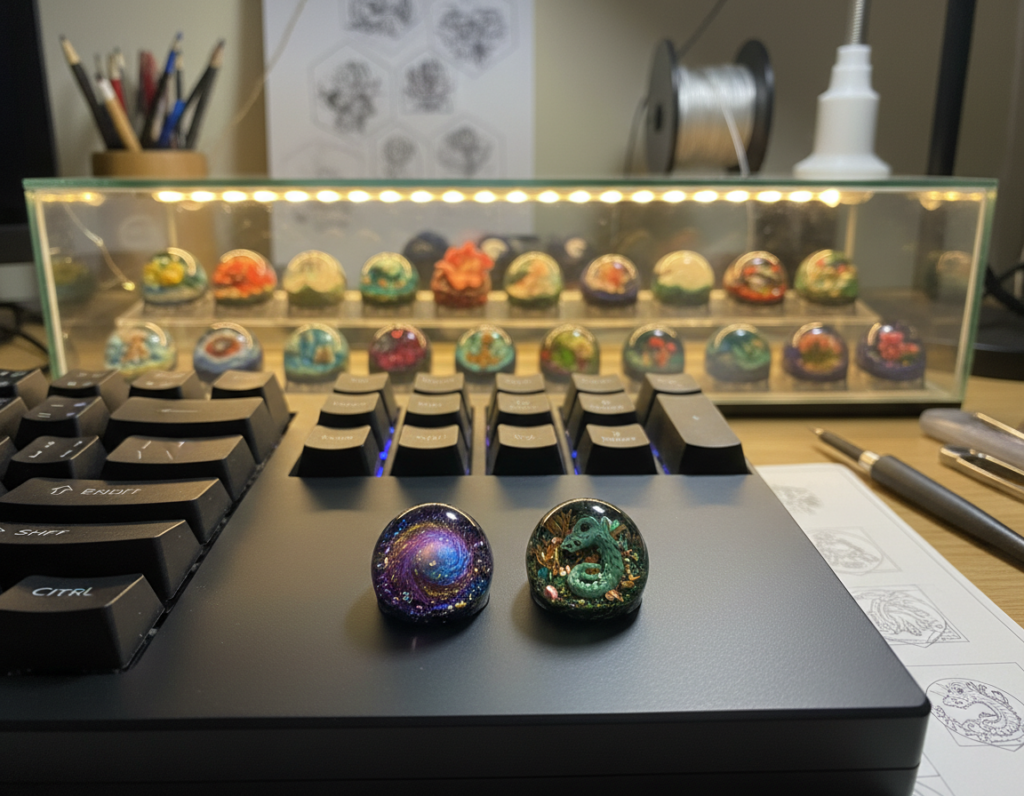
How releases affect your buying strategy
In-stock items are first-come, first-served and easiest to checkout. Raffle-only gives winners a chance but rewards timing and presence in announcement channels. Group buys require patience but can secure specific sizes and variants.
Timing tactics for sold-out culture
“Sold out” is normal—small runs and drops create scarcity. Monitor drop schedules, join mailing lists, and follow social channels to catch announcements.
Decide your needed profile and row ahead of time so you can checkout fast when a drop opens.
Use product tags to shop smarter
- Rows & profiles: Filter Row 1 vs Row 3 and confirm SA, Cherry, OEM, or Jelly profile to match your board.
- Compatibility: Check Cherry MX vs Topre tags so the stem fits your switch type.
- Sizes: Use 1u–3u and 6.25u/6.5u/7u tags for proper sizing, especially for spacebars.
Choosing form factor and noting price
Start with a 1u accent if you are new. Bigger stabilized pieces like Enter, Shift, or spacebars are visually striking but need careful measurement.
Price varies by release method and size—group buys or raffles can affect final cost and availability.
Match an artisan keycap to your keyboard without guessing
Start with layout and row, then choose the sculpt—don’t reverse the order. This simple order prevents common fit mistakes and keeps purchases practical.
Quick, no-guess checklist:
- Identify your layout: 65%, 75%, TKL/80%, or full-size/100%.
- Pick a safe position first: ESC or any 1u key makes sizing easiest.
- Only attempt Enter/Shift/Backspace after you confirm stabilizers and unit length.
- Measure spacebar units (6.25u, 6.5u, 7u) before buying a long cap.
Where artisans fit best across common layouts
ESC and other 1u slots work across 65%, 75%, 80% (TKL), and 100% boards. These spots are the least likely to need a custom cut or adaptor.
Enter and big modifiers need layout checks. Spacebars are only safe when the unit length matches your board.
Row choice and daily use
Row 1 is designed for top-row accents. Row 3 sits in the primary typing zone and reads differently when sculpt height or angle changes.
For wear and joy, put a sculpt on ESC for visuals, Enter for frequent satisfaction, or a single modifier if the piece is comfortable under your thumb.
Lighting and durability expectations
Most sculpted pieces are non-shine-through; treat them as decorative surfaces rather than backlight legends. Keychron filters explicitly list Shine Through as “No.”
Resin detail needs gentle cleaning and no harsh solvents to protect fine work. Metal options add weight and can alter switch feel; finishes may show patina or micro-scratches over time.
Practical note: higher price often reflects complex resin casting or metal finishing, so match spend to how hard you type on that key.
Conclusion
A smart buy starts with specs: choose material first (resin vs metal), confirm profile and row, then verify stem compatibility before you shop by design.
Start small: pick a 1u accent like ESC to avoid fit risk. Move to Enter or spacebar only after you confirm stabilizers and unit lengths.
For quick browsing and clear filters, Keychron is practical. For drops and raffles, Jelly Key rewards timing and tag literacy. Act while pieces are available, but use wishlists and alerts and never sacrifice compatibility for scarcity.
Next step: pick 2–3 candidate artisan keycaps, compare price vs material and placement value, then buy the one that best matches your board and daily use. For extra guidance, see our collector’s guide.