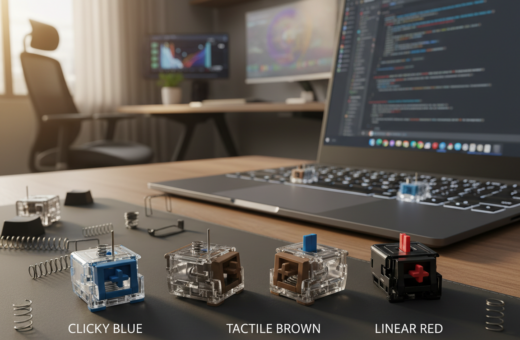
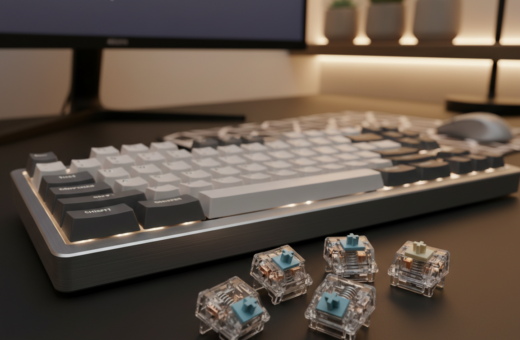
Looking to cut fatigue without losing accuracy? This guide helps you pick lighter actuation options that keep each press feel precise and controlled.
We define the buyer’s goal as choosing parts that reduce strain during work, school, or content creation while keeping comfort high.
Expect lighter force to feel smooth when the tactile profile matches your pace. Good designs give clear feedback so you avoid heavy bottoms and wasted motion.
We compare major options through a comfort-first lens, not short gaming bursts. The focus includes silent switches for shared spaces and how silencing affects feel, sound, and long-term comfort.
The guide targets mechanical keyboard users who want reduced effort without losing tactile confirmation. Follow a simple decision path: learn force terms → pick tactile profile → check sound limits → choose proven models → tune your build.
This is practical and commercial-intent advice to help you shortlist options and avoid costly trial-and-error. Find focused recommendations and real-world notes on wobble, scratch, and office-friendly sound at top picks for comfortable sessions.
What “low resistance” really means for long typing comfort
Understanding how measured force maps to what your fingers actually feel helps you choose parts that cut effort without losing control.
Actuation force is the push needed to register a press; bottom-out force is what you feel when the stem hits the end of travel. If you repeatedly bottom out with high bottom-out force, your hands fatigue faster even if actuation is light.
The placement and shape of a tactile bump change perception. A shallow, early bump can make a switch feel lighter, while a late, sharp bump makes the same force feel heavier. That bump interacts with spring weight and travel to shape each press.
Mechanical switches offer consistent rebound and clear feedback compared to membrane boards. That consistency helps reduce over-pressing and evens out impact across each keystroke.
Quick self-check: notice if you tend to bottom out, prefer quiet near-membrane feel, or want more mechanical character. These checks guide the best choice for your typing experience and future tuning.
How to choose low resistance keyboard switches for long typing
A good tactile profile tells your finger when a keystroke registers, without demanding extra muscle each time.
Picking the right tactile profile: rounded tactile bump vs sharp bump
Rounded tactile bump offers a softer, less startling event. It helps maintain pace and reduces sudden strain.
Sharp bump gives a clear, defined moment. That can feel precise but may increase fatigue if you press hard.
Actuation point, feedback, and consistency across the keystroke
Early actuation with solid feedback often stops you from bottoming out. Late actuation can push you toward heavier presses.
Consistency matters: a predictable keystroke reduces over-pressing and keeps fatigue down during long sessions.
Sound profile, stem wobble, and scratch
Match the sound profile to your environment: office calls, shared rooms, dorms, and streams need different noise ceilings.
Stem wobble and housing tolerances affect stability and high-frequency rattle. Scratch can be felt or just heard; tight housings often hide audible scratch better.
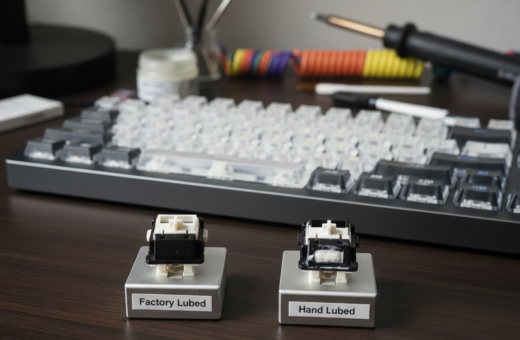
Factory lube vs hand lubrication
Good factory lube can be sufficient. Some models (Akko Penguin, WS Silent Tactile) ship smooth out of the box.
Hand lubing improves smoothness, reduces ping, and can tame slight scratchiness (TTC Bluish White may show scratch more in sound than feel).
- Choose the profile that matches your pace and noise limits.
- Expect the best performance when actuation, bump, and housing align.
- Remember: the lightest spring isn’t always the best choice; match the amount of feedback to your workflow.
Silent tactile switches explained: comfort-first design without the clack
Reducing impact noise without dulling feedback is the main goal of silent tactile engineering. These silent switches aim to keep the tactile moment while muting the loud hits at bottom-out and top-out.
Silicone dampeners on stem rails
How it works: small silicone pads on the stem rails soften landings and returns.
Akko Penguin and Outemu Cream Yellow use this mechanism. The result is a cushioned feel that many describe as gentler on the fingers and ears.
Silicone ring designs
Rings around the stem rails give a firmer bottom-out while still cutting noise. Durock Shrimp uses this approach to keep a solid feel but less clack.
Relief cuts without silicone
WS Silent Tactile relies on relief cuts. This design absorbs shock without extra material, so the tactile event stays more natural and less “mushy.”
Internal pads and hybrid dampening
TTC Bluish White mixes an internal bottom pad with a top ring. Hybrid designs let one part mute impact while another preserves tactile feedback. That combo can make these models near-membrane quiet.
“Even with dampening, a sharp bump may still create audible feedback at the actuation point.”
- Choose maximum quiet if muted operation matters most.
- Choose balanced quiet/firmness for a solid bottom-out and reduced noise.
- Choose relief-cut to keep a natural tactile feel with less cushioning.
Best low resistance silent tactile switches for long typing sessions
When comfort matters most, these picks focus on clear feedback with muted impact. Each entry notes who benefits and what trade-offs to expect.
Akko Penguin
Sharp “P” tactile bump similar to Gazzew Boba / Holy Panda-style. The silicone stem-rail dampening and smooth factory lube cut harsh landings. Minimal wobble helps reduce fatigue, though a faint scratch can improve with a light hand lube.
Outemu Cream Yellow
Top-position bump with a creamy, quiet sound. Box/dustproof stem keeps tactility crisp. A great choice when shared spaces demand low volume without losing a tactile moment.
Durock Shrimp
Distinct yet not overly sharp bump and a silicone ring for muted “thock.” It favors comfort over punchy tactility and suits writers who want sustained comfort with modest spring ping.
TTC Bluish White Silent
Rounded tactile bump and near-membrane volume thanks to internal dampeners and a top ring. Tight tolerances mean low wobble; off-center scratch may be more audible than felt. Solid option for office builds.
WS Silent Tactile
Relief-cut dampening keeps a snappy, non-mushy feel without silicone. Factory lube smooths action; it’s close to silent while retaining a traditional tactile profile.
“Choose by bump intensity, tolerance for minor ping/scratch, and whether maximum silence or a normal feel is your priority.”
- Shortlist goal: reduce fatigue, not follow hype.
- Cross reference: compare any sharp bump to Gazzew Boba/Holy Panda as a benchmark.
Typing feel breakdown: bump shape, stem design, and fatigue over time
Small differences in bump curve can change finger workload across an entire writing session. That single detail affects how much effort your fingers use on every press and how quickly they tire.
Sharp tactile bump vs rounded tactile bump for sustained writing
A sharp bump feels snappy and decisive. It helps accuracy but may increase strain during sustained typing.
A rounded tactile bump spreads the event over more travel. That softer cue can reduce repeated impact and keep your hands fresher when you write for hours.
Off-center keypress behavior and how scratchiness shows up
Wider keycaps and stabilized keys often cause off-center keypresses. When a press lands off-axis, some designs reveal scratch as friction or as a high-pitched rasp.
That rasp can be more audible than tactile. TTC Bluish White, with tight tolerances and a dustproof stem, may show slight off-center scratch in sound more than in feel.
Dustproof/box stem designs and their impact on feel and stability
Box stems and dustproof stems increase lateral stability and cut wobble. Outemu Cream Yellow and WS Silent Tactile use these designs to keep each keypress straighter and more consistent.
Akko Penguin shows minimal stem wobble in real builds, which helps a crisp, even feel over long sessions.
“Match bump shape and stem stability to your routine: soft landings if you bottom out, crisp feedback if you hover-type.”
- Writers/coders: rounded tactile or tight stem for smooth, even feel.
- Heavy typists: choose softer landings to reduce impact fatigue.
- Spreadsheet work: stable stems and clean tactility keep presses predictable.
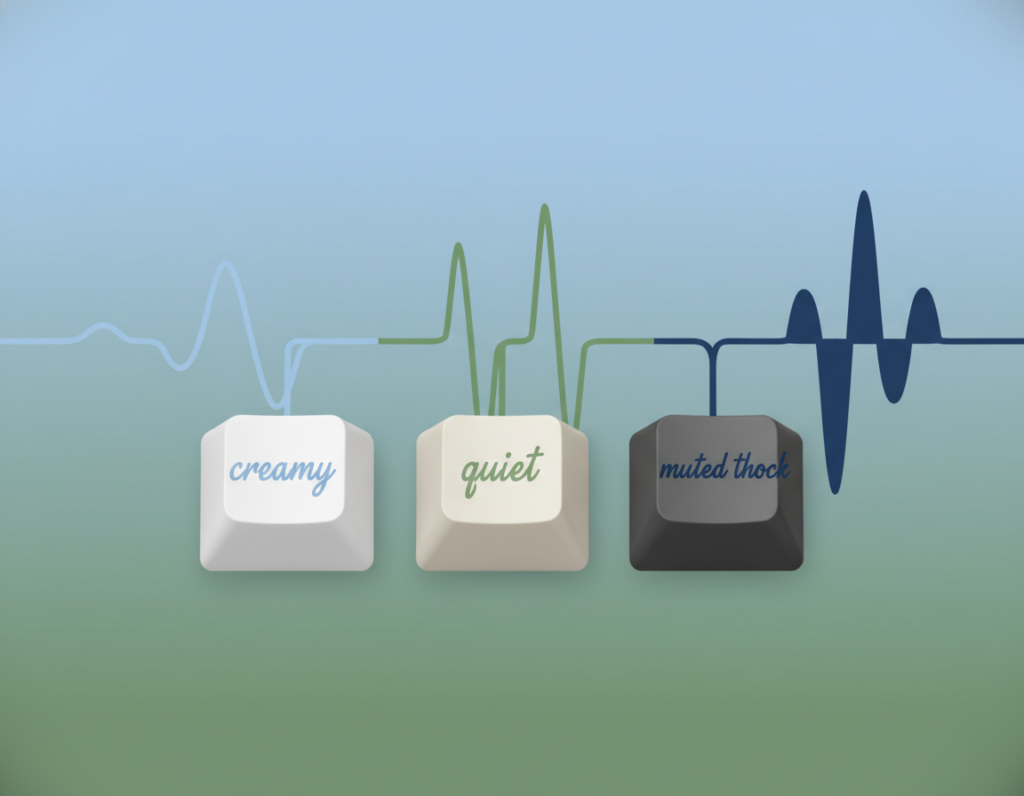
Sound profile comparison: from “creamy” quiet to muted thock
Sound tells you as much about comfort as force does; different dampening styles shape how a board feels and how much it distracts.
What makes a switch truly silent vs just “quieter”
Truly silent designs damp both bottom-out and top-out and limit case impact. They cut the mechanical clack at both ends.
By contrast, quieter models reduce clack but may still give sharp actuation clicks or housing rattle.
Why tactile feedback still creates audible cues
Even with pads, a sharp bump can produce a small tick at actuation. Akko Penguin is an example; its sharp bump yields audible feedback despite dampers.
This means tactile feedback and silence are often a balancing act rather than an either/or choice.
Spring ping and other noises that affect perceived loudness
Parasitic noises—spring ping, leaf ping, and housing resonance—raise perceived volume more than measured decibels.
- Identify: ping often rings when a plucked spring or loose housing vibrates.
- Mitigate: add case foam, swap springs, or pad the plate to cut resonance.
Choosing switches sound for calls, dorms, and late-night use
Outemu Cream Yellow is “creamy” and discreet. Durock Shrimp gives a muted thock but may show slight spring ping. TTC Bluish White reads near-membrane thanks to internal pads. WS Silent Tactile feels like a quieter normal tactile.
Practical tips: use softer sound profiles for work calls, near-membrane types for late-night writing, and consistent quiet across keys in shared offices. Streamers should also combine desk mats and case dampening to stop transference to mics.
“Perceived loudness depends on pitch and sharpness as much as raw volume.”
Design highlights that matter in real builds
Transparent tops, tight tolerances, and durable dampers shape both look and performance. These details affect RGB glow, seating stability, and how silencing parts behave over months of operation.
Transparent top housings and RGB shine-through
Durock Shrimp and TTC Bluish White Silent use clear tops to boost north-facing LEDs and shine-through keycaps. That boosts color saturation and makes single LEDs look fuller.
If RGB is a priority, choose a clear top and match it to your LED orientation and cap style.
PCB compatibility and mounting considerations
TTC Bluish White officially supports 3-pin PCB mounting. That avoids hot-swap headaches on many mainstream boards.
Check plate fit and socket tightness. Loose tolerances let stems wobble and make seating inconsistent. A tighter fit gives better repeatable feel and less case rattle.
Silencing mechanism durability and long-term operation feel
Silicone stem-rail pads (Akko/Outemu) cushion landings but compress over time. Rings (Durock Shrimp) keep more shape yet still change feel after heavy use.
Relief cuts (WS) avoid material wear, preserving a stable operation longer. Internal pads plus a top ring (TTC) blend cushioning and durability but may settle slightly as lubes and oils migrate.
- Buyers should check listings for clear-top notes, 3-pin support, and the silencing method used.
- Choose tight tolerances if stability and uniform performance matter more than maximum dampening.
- Pick the silencing style that matches preferred bottom-out firmness and expected lifespan.
“Transparent tops help RGB pop; relief cuts and tight housings help performance hold up over time.”
Matching switch choice to your use case
Your workflow should drive the choice. Whether you need whisper-quiet operation during calls or a clear tactile event to stay accurate, pick the model that matches how you type and play.
Best silent options when noise is the top priority
If quiet matters most, prioritize silicone stem-rail dampening. Akko Penguin and Outemu Cream Yellow reduce both downstroke and return noise while keeping a crisp actuation.
Best for big tactile bump lovers who still want reduced noise
Durock Shrimp is a great choice when you want a pronounced tactile bump yet muted impact. Expect more audible actuation clicks than the truly silent types, but less bottom-out clack.
Best for avoiding “mushy” bottom-out while staying quiet
Choose designs with rings, internal pads, or relief cuts. TTC Bluish White and WS Silent Tactile keep a firmer landing and low volume. They preserve a clean feel without heavy cushioning.
- Decision tree: prioritize noise → silicone-damped; prefer big bump → Durock; want firm landing → ring/pad/relief.
- Mixed use (typing + gaming): lighter tactility can increase speed; stronger tactility improves accuracy and prevents accidents.
- If you hate spring ping: plan tuning; if you hate scratch: pick tight-tolerance models or lube.
The quietest option isn’t always the most comfortable if the feel becomes overly cushioned.
Getting the most comfort from your switches after purchase
A quick checklist after unboxing helps you keep the tactile character you chose while fixing squeaks and ping.
When to lube, when to leave factory lube alone: If you hear scratch or spring ping, a light, targeted lube on the stem rails and spring can help. Avoid heavy application on tactile points; too much lube will dull the intended feel and mask the profile.
Simple tuning checklist to improve performance
- Test several keys to isolate noise: spring, housing, or keycap.
- Apply small amounts of lube only where rough travel or scratch appears.
- Swap one spring or film a single switch first to judge change.
Fixing stem wobble and improving stability
Reduce stem wobble with switch films, tighter stems, or correct plate fit. More stable stems give a crisper feel and lower fatigue across long sessions.
Shaping sound with keycaps, plates, and case
Thicker keycaps lower pitch and add warmth. Plates and case materials change resonance; a damped case and softer plate cut harsh overtones and improve overall sound profile.
Office build advice: prioritize controlled sound, stable stems, and a cap profile that supports neutral finger posture. Make changes one step at a time so you keep the switch character you bought while improving smoothness and acoustics.
Conclusion
low resistance keyboard switches for long typing mean a practical mix: manageable force, a matched tactile profile, and bottom-out that won’t punish your fingers over hours.
Focus your choice on three things: bump shape preference, noise limits, and stability. Also decide if you will tune or lube a switch after purchase to refine feel and sound.
Silencing methods matter: silicone dampers soften landings, rings give firmer thocks, relief cuts avoid material wear, and internal pads blend both comfort and quiet.
Final shortlist: maximum silence → silicone-damped; balanced comfort → rings or internal pads; normal tactile but quieter → relief-cut designs.
Pick based on your environment and personal tactile feedback. As a practical next step, order one or two samples and test feel and sound on your own mechanical keyboard before committing to a full set.